Showing posts with label IBS. Show all posts

Tuesday, November 15, 2016

Some time people lost of hope when dealing with IBS


Some people don't have the benefit of Fodmaps. their stomach act different with the same type of food each day. this is the most hard IBS to handle. cause you can't follow the normal FODMaps if you have the same problem. you must try deep level fodmaps, with the chart of ingredients those are used in the food.


it will be more time consuming if you try new fodmaps, with the specific food's ingredients. but that will be more helpful in long run. there are lots of lowfodmaps recipes in pinterest. you can easily follow them. it will take time when you will use this method.

Saturday, September 10, 2016

Top Symptoms to find out if you have IBS or not


Since Irritable Bowel is a syndrome, it is only likely that IBS symptoms are characterized with various conditions for which the exact causes of appearance are not clear. What is definite though is that IBS symptoms contribute to the mildness or aggravation of the disorder. And with the knowledge of the nature of each symptom, the creation of possible cures to the entire disease is possible.
Unfortunately, there is not enough information that can shed light on the mysteries concerning Irritable Bowel Syndrome. While it is observably present at large in the general population and is obviously not as hard to treat, there is still significant lack of knowledge in this field. This is true since research funding is not directed towards Irritable Bowel syndrome and IBS symptoms.
This lack is driven with the truth that Irritable Bowel Syndrome is not a life threatening condition, which requires no immediate cure. Moreover, the consideration given on its being a “functional disorder” adds more vague ideas as to what and how would these condition be cleared.
There are also a number of subtypes that often create the confusion and distinction between each disease. This is brought up by the combination of IBS symptoms that are normally seen in a large portion of patients.
The top three IBS symptoms Irritable Bowel Syndrome are bloating, diarrhea and constipation.

Monday, March 17, 2014

What Comprise an Irritable Bowel Syndrome Diet?

Irritable Bowel Syndrome Diet


An irritable bowel syndrome is a type of disorder that exhibits symptoms like bloating, constipation, cramping, diarrhea and abdominal pain. The most harm that IBS can do is to cause great distress and discomfort although it may have some effect on the intestines; but it's not something to worry about since it will not lead to severe illness such as cancer.

Irritable Bowel Syndrome or IBS can be controlled through diet and medications. At least twenty percent of the American adult population is suffering from IBS making this disorder common in the US. Surprisingly, IBS is more rampant among women and begins earlier than age 35 but of course this doesn't mean that men are not affected because they too suffer IBS.

The Cause of IBS
The cause of Irritable Bowel Syndrome is yet to be discovered but there are theories developed stating that most of the people that are affected by IBS have colons that react or are sensitive to certain types of foods and even to stress. Furthermore it is also believed that the immune system is also involved in causing IBS.

Irritable Bowel Syndrome Diet
Since Irritable Bowel Syndrome is believed to be associated with how the colon reacts to foods and stress there are IBS diet developed to help those who are affected with this disorder. It is a common notion that once a diet is intended to suppress certain disorder it is not tasty or delicious. And it is for this same reason that people failed to continue with their dietary treatment. But not Irritable Bowel Syndrome diet recipes because they are made delicious and guaranteed to control IBS.

The Irritable Bowel Syndrome diet includes drinks, appetizers, side dishes, salads, main dishes, desserts and many more. There are also recipes that include traditional and even international recipes to suit various taste. If there are recipes or foods allowed or advised for IBS patients there are also foods that needs to be avoided. And some of them include fatty foods like America's favorite French fries, some milk products like cheese and ice cream, alcohol, coffee, sodas and chocolate. These types of foods often worsen IBS and should be avoided at all cost.

However it should be noted that aside from the abovementioned foods there are still other types that may worsen Irritable Bowel Syndrome. So it is very important for an IBS patient to specially take note of the food that they take in.

The best diet to control IBS is to eat foods that are rich in fiber since it soften stool making it easier to bowel out.  There are lots of food sources where one can get fibers such as bread, fruits, bread, beans, cereal and vegetables.  However, make sure to slowly include fiber in your diet just to help your body to get accustomed to it and to prevent gas pain that may induce IBS symptoms.

Aside from food there are also fiber pills, which IBS patients may take and mixed it with a certain type of powder to create a high-fiber mixture.

The Quantity of Food Intake Matters
The amount of food that an IBS patient takes in can also trigger IBS symptoms. Large intake of food can often cause cramps as well as diarrhea especially for IBS patients. The best way to prevent such is to eat less each meal. And if ever IBS symptoms still persist consult your doctor right away.

Monday, March 10, 2014

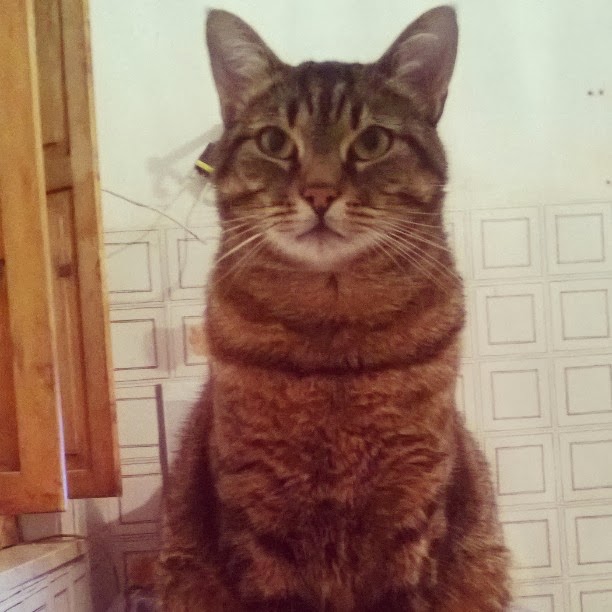
Irritable Bowel Syndrome and its Effects on Cats

Cats Irritable Bowel


Irritable Bowel Syndrome is not only common among humans but also among animals particularly cats. Basically, the IBS that is experienced by people is the same type that cats also feel. 

The Irritable Bowel Syndrome among cats is the same gastrointestinal disorder that is also felt by human. The large and/or small intestines are also affected. IBS in cats usually affects the contractions of the digestive tract resulting to irregular bowel movement. Aside from that, IBS also interferes with the normal distribution of food and waste material inside the cat's body resulting to the accumulation of toxins and mucus in the cat's intestines.


These accumulated toxins often obstruct the normal function of the digestive tract. In the process gas and stool are trapped causing bloating, constipation and distention. It is also surprising to note that the same IBS factors in human have been identified to cause the same effects among cats. Factors causing IBS such as stress, overuse of antibiotics, poor eating habits, bacterial, and viral infection, parasites and food allergies were found to affect cats as well. 

Likewise, a blockage is also very common among cats since they love to chew as well as swallow objects. This too can trigger IBS symptoms.


Symptoms of Irritable Bowel Syndrome in Cats

It would be surprising to note that cats and humans exhibit the same Irritable Bowel Syndrome symptoms. And here are some of them:

・Constipation among cats is just like in humans. It is also exhibited by hard, small, pebble-like stools, which make bowel movement very difficult. 
・Diarrhea is a more frequent bowel movement wherein the stool is often soft and watery. Cats with IBS usually experience successive loose bowel movement alternating with constipation. 
・Abdominal pain is also common among cats with IBS. The pain can range from mild to severe. 
・The presence of mucus in the stool is also a common sign of IBS.
・Another symptom of IBS that may be observed in cats is vomiting and nausea.
・Gas pain or flatulence is also an indication of IBS in cats
・Bloating 
・Intolerance to certain types of foods
・Anorexia which most of you may think is only common to us human but surprisingly is also exhibited by our feline friends. 

Treating Your Cat's Irritable Bowel Syndrome
Since Irritable Bowel Syndrome involves many factors, it is very important that you have your cats examined by a veterinarian. This way you will know what's triggering IBS symptoms in your pet cats. In case you prefer to apply natural methods in controlling your pet's IBS symptoms still it is better to consult first a veterinarian before applying any type of IBS treatment to your cat to avoid further complications.  

A change in your cat's diet is also a good way to control Irritable Bowel syndrome. However make sure that you consult a veterinarian or a nutritionist to provide your cat with a personalized diet and program. 

Feeding your cat with the right type of food is still the best way to control your cat's Irritable Bowel Syndrome. Cats like humans prefer different types of foods. There are some cats that like eating raw food while there are some that prefers home cooking or canned food. 

It is very important that you try to experiment with foods that work for your cat. If you can keep a food journal in which you can jot down foods that your cat needs to avoid then so much the better. This will guide you on the proper food to give your cat and in turn keeps IBS symptoms in control.